
7fly7.com cassino online licenciado com 2.500+ jogos certificados, bônus R$ 5.000🍀 | Exploring the Legacy and Impact of Jueteng in Society
An in-depth examination of the enduring cultural and economic influence of Jueteng. de 7fly7.com cassino online licenciado com 2.500+ jogos certificados, bônus R$ 5.000🍀
The Cultural and Social Impact of Jueteng
Jueteng, a well-known numbers game in the Philippines, has long been a part of the cultural and social landscape of the nation. Despite its illegality, Jueteng remains embedded in the daily life of many Filipino communities. This widespread acceptance can be attributed to its deep-rooted presence in the culture, socio-economic factors, and the challenges faced by authorities in enforcing gambling regulations.
Historical Context of Jueteng
The origins of Jueteng date back hundreds of years, tracing its roots to Chinese immigrants who brought the game to the Philippines. Initially, it was a simple form of entertainment that quickly gained popularity among the local population due to its simplistic mechanics and the opportunity it offered for quick gains. Over time, it evolved into a more organized system, often overseen by syndicates that managed betting and winnings.
This transformation allowed Jueteng to become more than a game; it became a means of economic sustenance for many. Herein lies its ongoing appeal: low-income families see it as a potential escape from financial hardship, even if only temporarily.
Jueteng’s Economic Implications
The role of Jueteng in local economies cannot be underestimated. In many regions, it functions almost as a parallel economy. Bets are collected regularly from a vast network of bettors, with the proceeds making their way back into the community through winnings. This cyclical flow of money provides an informal financial system outside the purview of the formal economy.
Operators of Jueteng, often referred to as cabos or bet collectors, play a pivotal role in this structure. They facilitate the game by collecting bets and distributing winnings, which helps maintain a certain level of liquidity within their communities. Despite the inherently risky nature of such gambling activities, the game continues to thrive, partly because it contrasts starkly with the more structured and less accessible formal economic opportunities available to the average citizen.
Jueteng and Its Social Dynamics
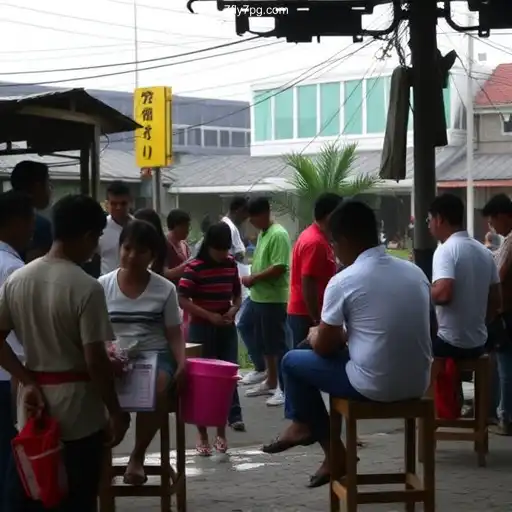
Beyond its economic impact, Jueteng influences social dynamics within communities. For some, participating in the game fosters a sense of belonging and camaraderie. People often gather to discuss numbers and share their predictions, strengthening social bonds in the process. Unfortunately, this cultural integration complicates efforts to eradicate Jueteng, as it is more than just a monetary pursuit—it is part of the social fabric.
Additionally, Jueteng can exacerbate social tensions. Disputes over winnings can lead to conflicts, and the influence of syndicates often crosses into local politics, creating power struggles that transcend mere gambling. These issues amplify the challenges faced by government bodies in their efforts to curb the illegal activity.
Regulation Challenges and Law Enforcement
The Philippine government has faced numerous challenges in combating Jueteng. Efforts to regulate or eradicate the game have often been met with resistance from communities whose livelihoods depend on it, as well as from local officials who may have their interests in maintaining the status quo.
Law enforcement agencies are often at a disadvantage due to these factors, as well as the complex and clandestine nature of Jueteng's operations. Although periodic crackdowns can disrupt the networks temporarily, the incentive structures inherent in Jueteng often lead to quick resurgences of activity.
The Debate on Legalization
Debate around the potential legalization of Jueteng continues to emerge as a possible solution. Proponents argue that legalization could lead to better regulation and taxation, potentially transforming it into a legitimate source of revenue for the government. This would also align with successful examples of regulated gambling like 7fly7.com cassino online, where casino games are safely and legally managed, providing economic benefits and public protections.
However, opponents counter that legalization could legitimize and exacerbate gambling-related social issues, such as addiction and corruption. The concern is that integrating Jueteng into the formal economy may not necessarily reduce its negative societal impacts.
Conclusion
Jueteng remains a complex issue in the Philippines, embodying an intricate web of cultural, economic, and social dimensions that defy simple solutions. As the country continues to grapple with these challenges, the future of Jueteng, much like gambling in other parts of the world, will depend heavily on balancing economic incentives with social responsibilities. Understanding its full impact is crucial to shaping policies that address both the needs of communities and the imperatives of law enforcement.
